Research


How do we restore synaptic function following peripheral nerve injury?
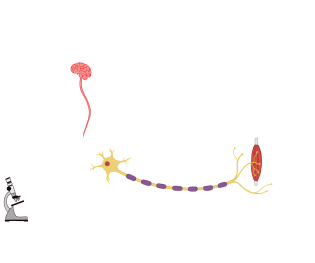
Proprioceptive sensory neurons extend long axons from muscle receptors to the spinal cord, where they form synapses with motoneurons to encode limb position and movement. Following peripheral nerve injury, these sensory inputs are permanently lost, contributing to persistent motor deficits. Our work has shown that degeneration of these central sensory axons is driven by a neuroinflammatory response involving microglia, the resident macrophages of the nervous system. Using pharmacological or genetic approaches to suppress this reaction, we can preserve sensory-motor connectivity in the spinal cord. However, synaptic function and behavioral recovery remain incomplete. Ongoing studies in the lab aim to identify strategies that restore functional synaptic transmission and improve motor outcomes during peripheral nerve regeneration.
How does disease of the peripheral nervous system impact central neural network connectivity?
Sensory and motor axons within peripheral nerves are critical for integrating sensory feedback and generating movement. Our lab investigates how diseases of the peripheral nervous system disrupt these processes and alter central neural network connectivity. Specifically, we study Charcot-Marie-Tooth disease, an inherited neuropathy that causes progressive axonal degeneration and motor impairment. We aim to define how this disease affects sensory-motor integration within the spinal cord and to explore therapeutic strategies that reestablish normal (or even near normal) neural communication and function.
Multimodal sensory integration within the spinal cord
The central nervous system depends on proprioceptive sensory feedback from skin, joints, and muscles to construct an accurate representation of limb position and movement. Our lab investigates how spinal neurons integrate these converging streams of sensory information to shape motor output. By defining the cellular and circuit mechanisms underlying this integration, we aim to understand how the spinal cord transforms diverse sensory signals into coordinated motor commands.
Our Sponsors

